
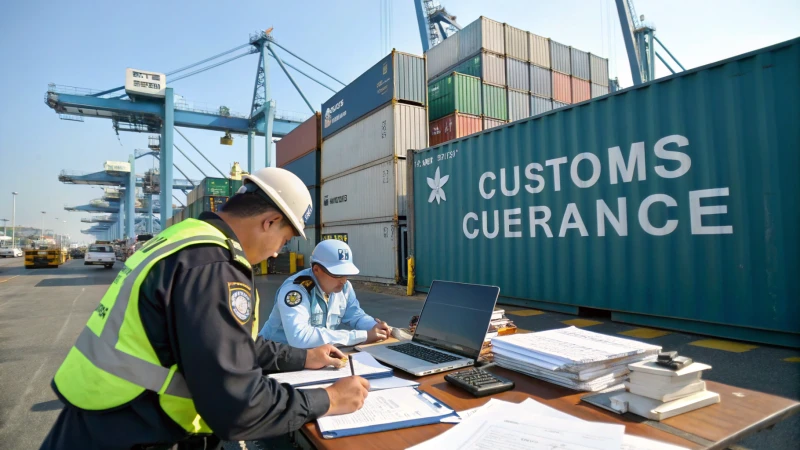
Every year, thousands of Indian businesses step into international trade — and the first question they ask is always the same. What does the export process for shipping goods abroad from India actually look like? The answer, frankly, is more straightforward than most people expect. However, without a clear roadmap, even experienced businesses face costly delays, rejected shipments, or compliance issues that damage buyer relationships. Understanding this process is, therefore, not just helpful — it is essential for any Indian company serious about growing its global footprint.
This guide covers each step clearly — from registration and documentation to customs clearance and freight coordination — so you know exactly where to begin and what to prepare.
Quick Answer
The export process for shipping goods abroad from India involves obtaining an IEC code, registering with DGFT, preparing key shipping documents, completing customs clearance through ICEGATE, and coordinating freight with a licensed forwarder. Each step follows a defined regulatory sequence governed by DGFT and Indian Customs guidelines, which directly impacts delivery timelines, buyer trust, and GST refund eligibility.
Step 1: Obtain Your IEC Code
Before shipping a single unit abroad, every Indian exporter must obtain an Import Export Code (IEC) from the Directorate General of Foreign Trade (DGFT). This 10-digit code, moreover, serves as your business identity in all international transactions — without it, customs will not process your shipment under any circumstances.
The application process is, consequently, quite accessible. You can apply online at the DGFT portal using basic business documents and a valid PAN card. Additionally, IEC registration is a one-time process — it does not require renewal and remains valid for the lifetime of the business.
Step 2: Register on DGFT and Export Promotion Councils
Once your IEC is active, you should register your business on the relevant Export Promotion Council (EPC) based on your product category. Furthermore, if you plan to claim GST refunds on exports — which most exporters do — filing a Letter of Undertaking (LUT) under GST is mandatory before each financial year begins.
Notably, LUT filing allows you to export without paying IGST upfront, which significantly improves your working capital position. Therefore, this step should be completed well before your first shipment leaves Indian shores.
Step 3: Prepare Export Documentation
Documentation is, specifically, where many first-time exporters encounter trouble. Incomplete or incorrect paperwork causes shipment holds, customs penalties, and buyer dissatisfaction. As a result, understanding exactly which documents are required is non-negotiable.
Core Documents Required
- Commercial Invoice — details of goods, quantity, price, and buyer information
- Packing List — itemised breakdown of shipment contents
- Bill of Lading or Airway Bill — issued by shipping line or airline
- Certificate of Origin — confirms goods are manufactured in India
- Shipping Bill — filed electronically via ICEGATE for customs clearance
Furthermore, depending on your product and destination country, you may additionally need inspection certificates, phytosanitary certificates, or specific regulatory approvals. Therefore, always confirm destination-country requirements with your freight forwarder before shipment.
Step 4: Customs Clearance via ICEGATE
Your licensed Customs House Agent (CHA) files the Shipping Bill electronically through the ICEGATE portal. Consequently, Indian Customs examines the goods, verifies all documentation, and issues the Let Export Order (LEO). Without LEO, your cargo cannot legally depart Indian shores — making this step, therefore, one of the most critical in the entire export process for shipping goods abroad from India.
Accurate documentation at this stage directly determines clearance speed. Moreover, any discrepancies between the Commercial Invoice and the Shipping Bill will trigger additional scrutiny, causing delays that impact your buyer’s delivery schedule.
Step 5: Freight Coordination and Shipment Dispatch
After customs clearance is granted, your freight forwarder coordinates cargo loading — whether by sea, air, or road depending on destination and urgency. Meanwhile, you receive the Bill of Lading from the shipping line, which is the key document your buyer needs to claim goods at the destination port.
Additionally, at this stage you must share all original shipping documents — including the Commercial Invoice, Packing List, and Certificate of Origin — with your buyer via courier or digitally, depending on your agreement. Similarly, you should also initiate your GST refund claim or IGST credit process at this point, as the shipping bill serves as the primary evidence of export.
Export Document Quick Reference Table
| Document | Purpose | Issued By |
| Commercial Invoice | Price & goods details | Exporter |
| Packing List | Shipment contents | Exporter |
| Bill of Lading | Cargo receipt & title | Shipping Line |
| Certificate of Origin | Confirms Indian origin | EPC / Chamber |
| Shipping Bill | Customs export filing | CHA / ICEGATE |
Why This Process Directly Affects Your Business Outcomes
Understanding the export process for shipping goods abroad from India is not merely a compliance requirement — it is, in fact, a competitive advantage. Exporters who manage documentation efficiently build trust with international buyers faster, face fewer shipment holds, and receive GST refunds more quickly. Consequently, their cash flow remains healthier and their buyer relationships stronger.
Furthermore, first-time importers partnering with Indian suppliers specifically evaluate how well the exporter handles paperwork. Therefore, a clean, well-organised export process signals professionalism — and that signal alone can determine whether a buyer returns for repeat orders.
Key Takeaways for Indian Exporters
- IEC registration from DGFT is the mandatory first step before any export transaction.
- LUT filing under GST allows you to export without paying output tax upfront, protecting your working capital.
- Accurate documentation — particularly the Shipping Bill — directly determines customs clearance speed.
- A licensed CHA and freight forwarder significantly simplify the customs and logistics process.
- The Let Export Order (LEO) from Indian Customs is the final clearance your shipment needs before departure.
Ready to start exporting from India? Connect with a DGFT-registered export consultant to get your IEC, documentation, and first shipment in order — without the guesswork.